

 Brenda Lyle – Florida Today
By Brenda Lyle
Q: Is music actually good for my brain?
A: As we grow older, taking care of our brain becomes just as important as caring for our body. Staying mentally healthy helps support memory, independence, and overall quality of life. A brain-healthy lifestyle includes not only physical wellness and nutrition, but also emotional well-being, social connection, and mental stimulation. Together, these areas help support long-term cognitive health.
I’m frequently asked to explain what changes are a normal part of aging and which may be early warning signs of dementia. Occasional forgetfulness—such as misplacing keys or forgetting a name and remembering it later—is common. However, ongoing memory loss that interferes with daily life may be a concern. Early warning signs can include difficulty finding words, confusion about time or place, trouble managing familiar tasks, changes in mood or personality, or withdrawing from social activities. If these changes are noticed, it’s important to talk with a healthcare provider.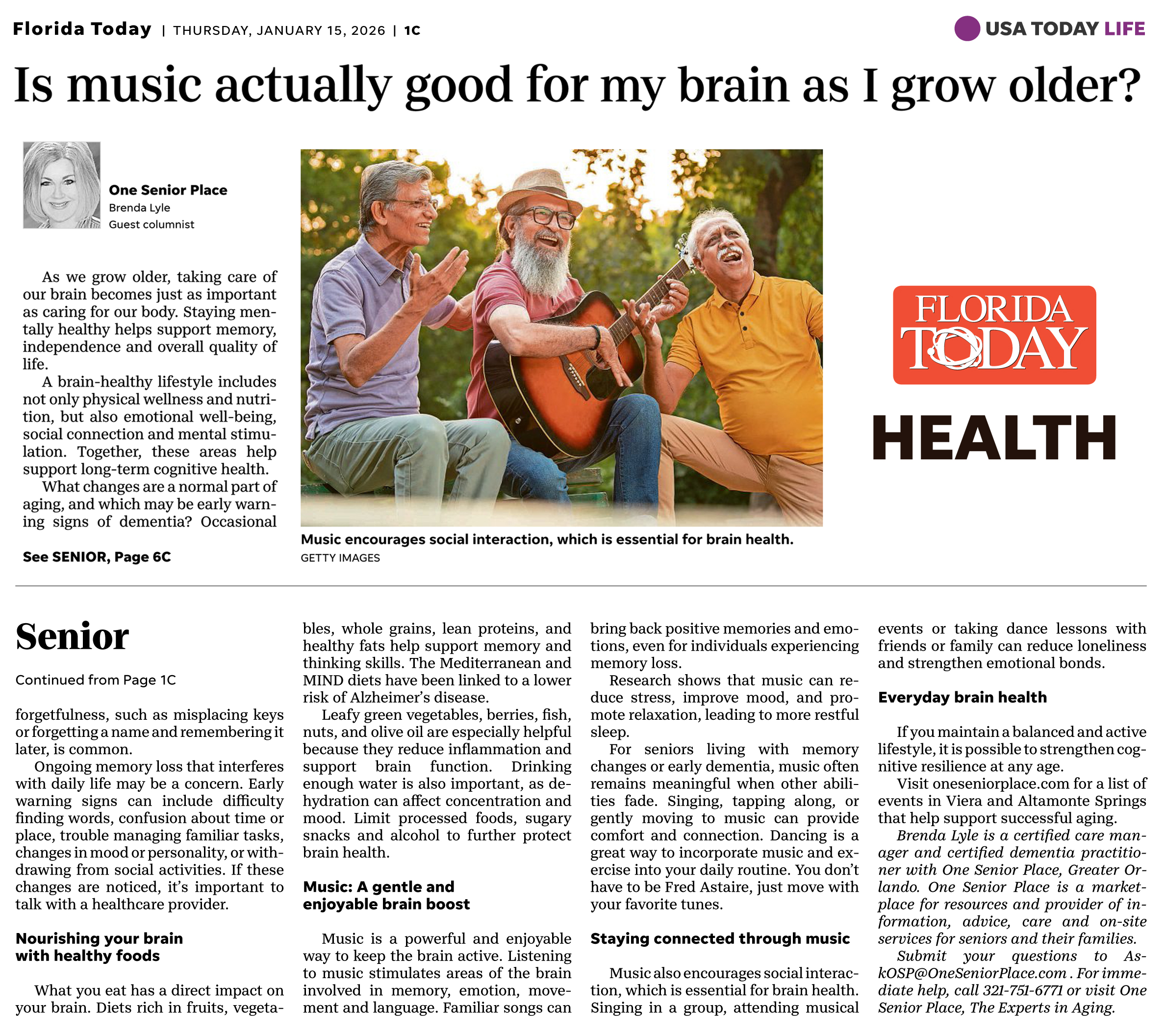
Nourishing Your Brain with Healthy Foods
What you eat has a direct impact on your brain! Diets rich in fruits, vegetables, whole grains, lean proteins, and healthy fats help support memory and thinking skills. The Mediterranean and MIND diets have been linked to a lower risk of Alzheimer’s disease.
Leafy green vegetables, berries, fish, nuts, and olive oil are especially helpful because they reduce inflammation and support brain function. Drinking enough water is also important, as dehydration can affect concentration and mood. Limit processed foods, sugary snacks and alcohol to further protect brain health.
Music: A Gentle and Enjoyable Brain Boost
Music is a powerful and enjoyable way to keep the brain active. Listening to music stimulates areas of the brain involved in memory, emotion, movement, and language. Familiar songs can bring back positive memories and emotions, even for individuals experiencing memory loss.
Research shows that music can reduce stress, improve mood, and promote relaxation– leading to more restful sleep. For seniors living with memory changes or early dementia, music often remains meaningful when other abilities fade. Singing, tapping along, or gently moving to music can provide comfort and connection. Dancing is a great way to incorporate music and exercise into your daily routine. You don’t have to be Fred Astaire- just move with your favorite tunes.
Staying Connected Through Music
Music also encourages social interaction– essential for brain health. Singing in a group, attending musical events, or taking dance lessons with friends or family can reduce loneliness and strengthen emotional bonds.
Everyday Brain Health
If you maintain a balanced and active lifestyle, it is possible to strengthen cognitive resilience at any age. Visit OneSeniorPlace.com/events for a list of events in Viera and Altamonte Springs that help support successful aging.
Brenda Lyle is a Certified Care Manager and Certified Dementia Practitioner with One Senior Place, Greater Orlando. One Senior Place is a marketplace for resources and provider of information, advice, care and on-site services for seniors and their families. Submit your questions to AskOSP@OneSeniorPlace.com. For immediate help, call 321-751-6771 or visit One Senior Place, The Experts in Aging.