
 Brenda Lyle – Florida Today
By Brenda Lyle
Q: My daughter wants me to join a support group. What’s the point?
A: If you’re a Baby Boomer, you were likely raised by the Silent Generation, where you learned to process hardship privately. For many Boomers, the idea of a support system is synonymous with fear of vulnerability or the lingering stigma of “therapy.” Support groups today turn this thinking on its head, by promoting camaraderie and focusing on the contributions members can provide for others on the same journey. The truth is, finding the right connection group can completely transform your health and happiness as you age.
While friends and family are great, there’s a unique comfort talking with peers who truly understand your daily experiences. Here are five types of groups to help you thrive.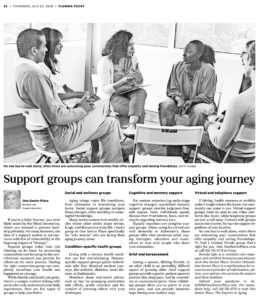
Social and Wellness Groups —Aging brings major life transitions, from retirement to downsizing your home. Social support groups navigate these changes, often resulting in meaningful friendships. Many senior centers host weekly circles where older adults share stories, laugh, and discuss everyday life. I lead a group at One Senior Place specifically for “solo seniors” who are facing their aging journey alone.
Condition-Specific Health Groups–Living with a chronic health condition can feel overwhelming. Disease-specific support groups gather individuals who face identical medical journeys, like arthritis, diabetes, heart disease, or Parkinson’s. Members share real-world advice, such as tips for managing medication side effects, gentle exercises– and the comfort knowing others with your challenges.
Cognitive and Memory Support–For seniors experiencing early-stage cognitive changes, specialized memory support groups provide judgment-free, safe spaces. Here, individuals openly discuss their frustrations, fears, and triumphs regarding memory loss. Equally important are caregiver support groups. When caring for a loved one with dementia or Alzheimer’s, these groups offer vital emotional relief, coping strategies, education and somewhere to vent with people who share your exhaustion.
Grief and Bereavement–Losing a spouse, lifelong friends, or an adult child is an incredibly difficult aspect of growing older. Grief support groups provide a gentle, patient space to process this deep pain. Led by counselors or experienced peers, these validating groups allow you to grieve at your own pace, and can provide immense hope during your darkest days.
Virtual & Telephone Support–If driving, health concerns or mobility make it tough to leave the house, the community can come to you. Virtual support groups meet on easy-to-use video platforms like Zoom, while telephone groups are just a call away. Connect with groups across the country, for top-tier support regardless of your location.
No one has to walk alone, when there are welcoming peer communities that offer empathy and lasting friendships. To find a Central Florida group that’s right for you, visit www.OneSeniorPlace.com or call 321-751-6771 in Viera.
Brenda Lyle is a Certified Care Manager and Certified Dementia Practitioner with One Senior Place, Greater Orlando. One Senior Place is a marketplace for resources and provider of information, advice, care and on-site services for seniors and their families. Submit your questions to AskOSP@OneSeniorPlace.com. For immediate help, call 321-751-6771 or visit One Senior Place, The Experts in Aging.