
 Brenda Lyle – Florida Today
By Brenda Lyle
Q: Are there resources for solo seniors?
A: Florida is an attractive retirement destination for many reasons. Warm weather and the absence of a state income tax make it especially appealing to older adults. However, many retirees relocate far from family, and when health or life circumstances change, they may find themselves aging alone. This growing group is often referred to as “solo seniors.”
A solo senior, or “solo ager,” is typically an adult aged 50 or older who is unmarried, lives alone, and lacks close family support. He or she may be single, widowed, divorced, or estranged from relatives. These seniors must, therefore, navigate aging with fewer built-in supports. According to the Florida Department of Elder Affairs, in 2024 nearly 24% of Floridians over age 60 were living alone.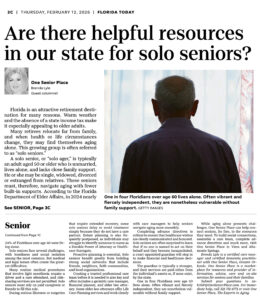
Solo seniors face several challenges, with loneliness and social isolation among the most common. However, medical and legal issues often create the greatest difficulties. Many routine medical procedures that involve light anesthesia require a driver and a care attendant, and ride-sharing services are not permitted. Solo seniors must rely on paid caregivers or friends to fill this role. During serious illnesses or surgeries that require extended recovery, some solo seniors delay or avoid treatment simply because they do not have a care partner. Estate planning is also frequently postponed, as individuals may struggle to identify someone to name as a Durable Power of Attorney or Healthcare Surrogate.
Proactive planning is essential. Solo seniors benefit greatly from building strong social networks that include friends, neighbors, faith communities, and local organizations. Creating a trusted professional care team before it is needed is also key and often includes a geriatric care manager, financial planner, and elder law attorney. Some elder law attorneys offer Life Care Planning services and work closely with care managers to help seniors navigate aging more smoothly. Completing advance directives is critical to ensure that healthcare wishes are clearly communicated and honored. Solo seniors are often surprised to learn that if no one is named to act on their behalf and they become incapacitated– a court-appointed guardian will step in to make financial and healthcare decisions. The guardian is typically a stranger, and their services are paid either from the individual’s assets or, if none exist, by the state.
One in four Floridians over age 60 lives alone. Often vibrant and fiercely independent, they are nonetheless vulnerable without family support. While aging alone presents challenges, One Senior Place can help connect seniors—for free– to the resources they need. To build social connections, assemble a care team, complete advance directives and much more, visit One Senior Place in Viera and Altamonte Springs.
Brenda Lyle is a Certified Care Manager and Certified Dementia Practitioner with One Senior Place, Greater Orlando. One Senior Place is a marketplace for resources and provider of information, advice, care and on-site services for seniors and their families. Submit your questions to AskOSP@OneSeniorPlace.com. For immediate help, call 321-751-6771 or visit One Senior Place, The Experts in Aging